Fortin Amps

Understanding EQ for gainy guitars

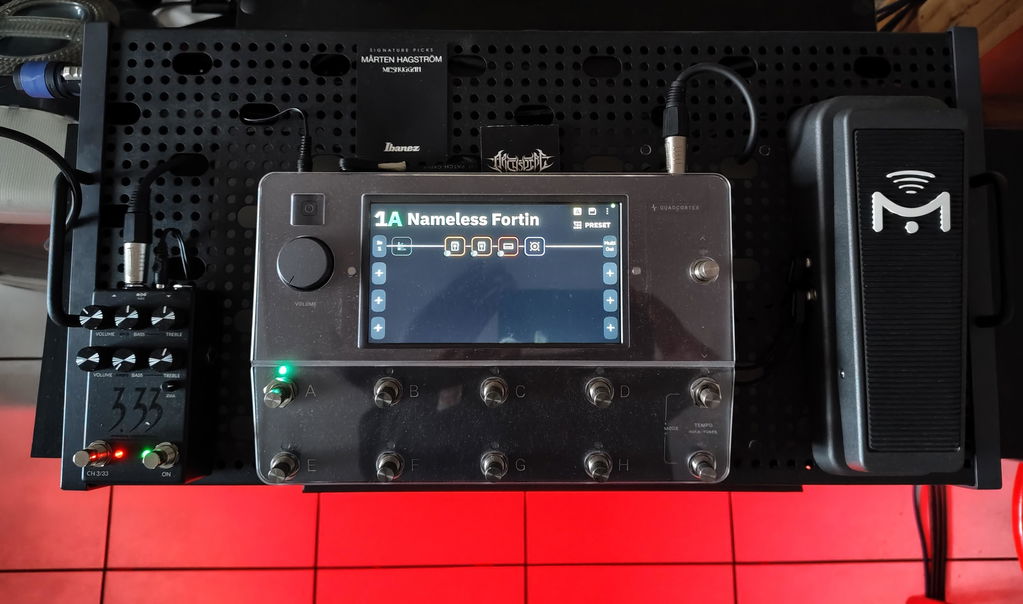
For this example, we use the basic 9 band graphic that is within the NeuralDSP plug-ins... In this instance, our man Kenway is using the Fortin Cali Suite.

  • 65 Hz
    Alot of what you are getting here falls clearly in the realms of flub. When playing by yourself, outside of the mix, all this bottom end sounds awesome, but within the mix itself, it will just create copious amounts of flub and you are already fighting against being heard.
  • 125 Hz
    This is where the start of the big changes happen. The sub-100 frequencies will make it flub, this is where it starts to get tubby, and when it is taken away, it will become VERY thin. In dealing with his frequency, you will need to pay extremely close attention to your tone as if you boost this too far, you will appear to lose some of the high-end while the mid range appears to clip into almost fuzz territory.
  • 250 Hz
    Like the 125, this will almost give the same issues if you abuse it - your high end will appear to disappear. You will also start to encroach onto vitally important frequencies enjoyed by the snare drum (150-300), so push it at your peril! Have it there to push the tone through the mix, but not too far...
  • 500 Hz
    This is where things start to get honky... 500 tends to be the subject of some debate, as this is where the real character starts to appear. Many digital instrument samples tend to be completely overloaded on 500 to make them sound better, but be aware of how crowded it can become.
  • 1k Hz
    This is the first one where you can totally change your tone, not only for the better, but for the worse. With this alone you can go from Metallica's scooped tone all the way to an old transistor radio and all the dullness that comes with it. Most of the time, in most recordings, this has been pulled back a little.
  • 2k Hz
    2k is not too dissimilar to 1k; you have to balance this to ensure you aren't too nasal, you aren't too dominant, and you aren't too forward in the mix.
  • 4k Hz
    4k can get REALLY nasty if not controlled properly, look for clarity and sheen, but watch for the start of horrible fizziness.
  • 8k Hz
    Here exists your true sheen, again, be aware of fizziness. Natural harmonics appear to ring and your tone will be in peoples faces without it being harsh.
  • 16k Hz
    The older you get, the more of your top end you lose, so be EXTREMELY careful what you are doing here. You probably don't need much here, so adjust only if you have too using your ears and not to how it looks. Never EQ to a "I usually have a smiley face", just use your ears!

Understanding EQ frequencies for guitars


Leave a comment


×