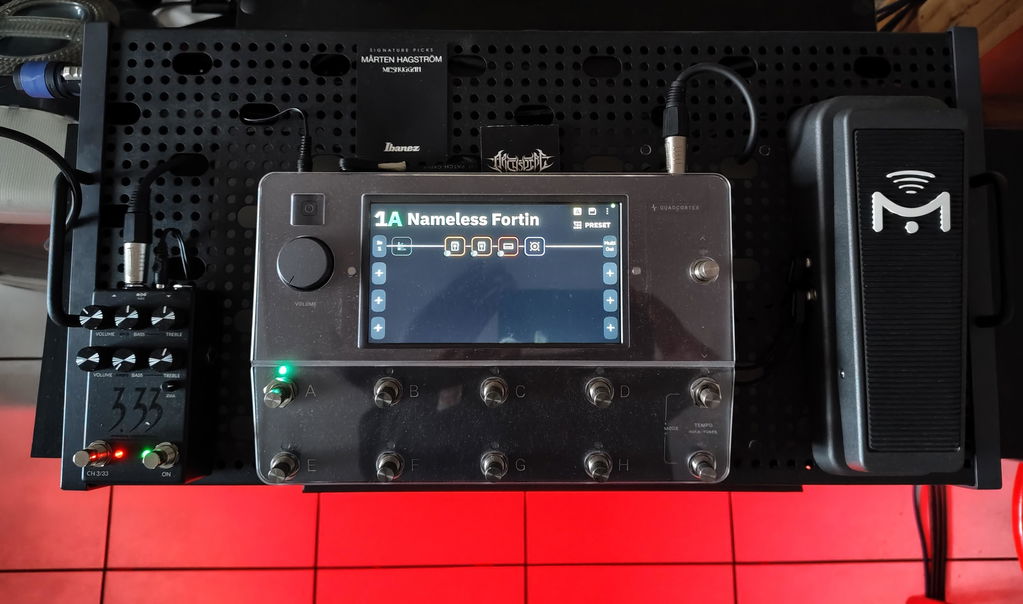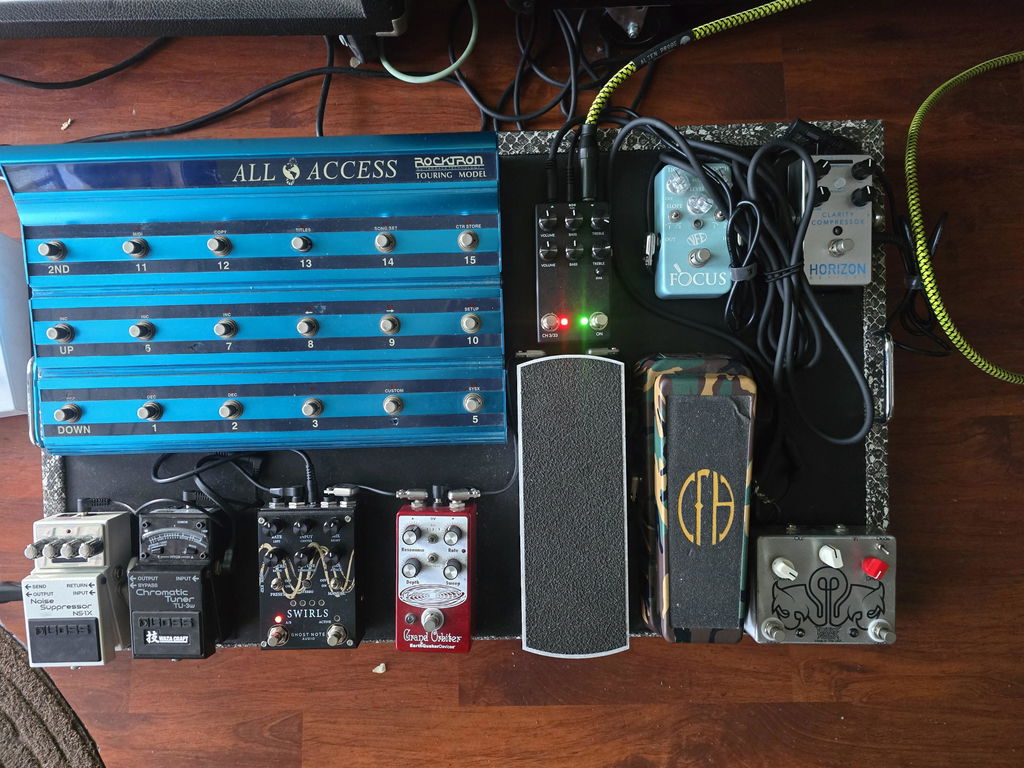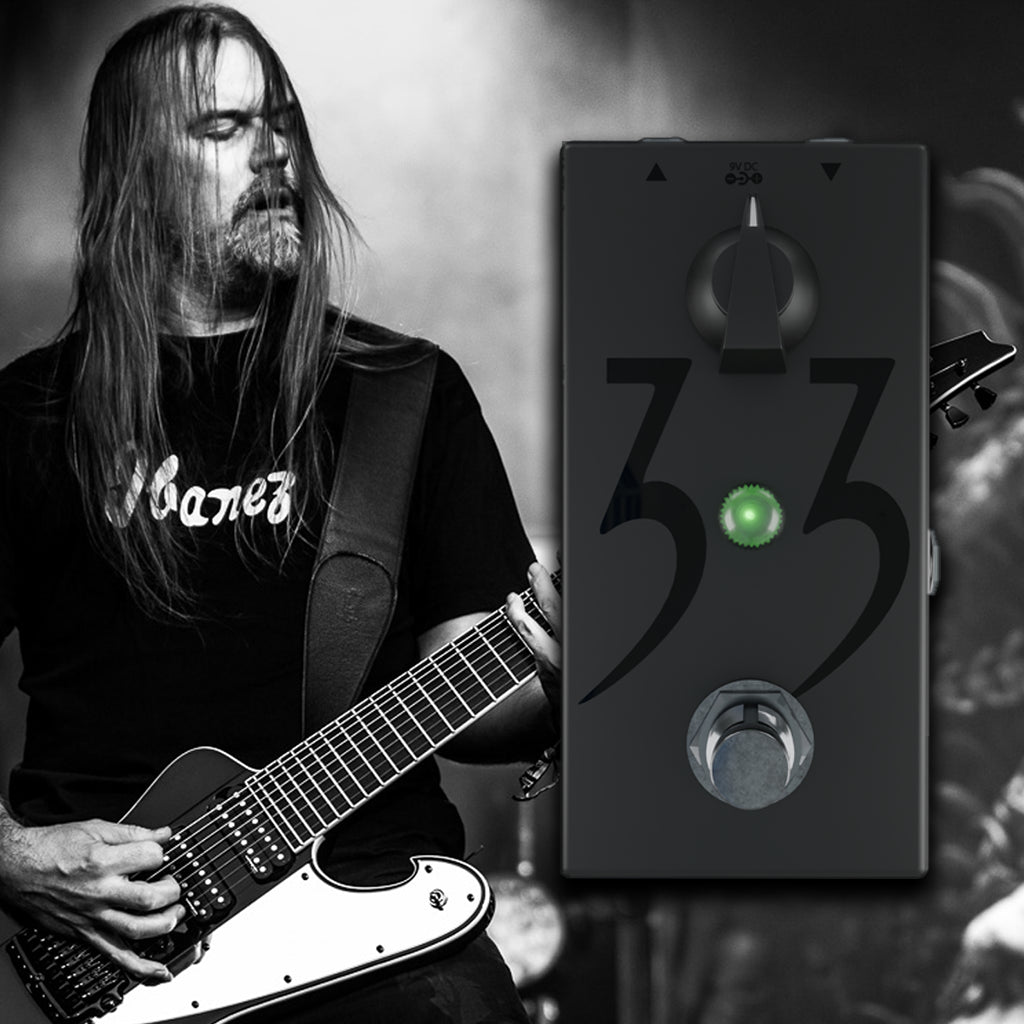

The absolute best noise gate I have ever used.
Very precise noise gate. Worth the cost, especially for live performances.
You’ve just bought a high-gain monster - a 100-watt tube head with more saturated clipping than a 90s industrial record. You dimed the gain, dropped your tuning to Drop A, and hit a low power chord, expecting the heavens to part. Instead, you got a wall of "flub." Your low end sounds like a wet blanket, your fast alternate picking is lost in a sea of fizz, and the "chug" sounds more like a "thud."
The natural instinct for beginners is to turn the gain up even further. Don't. In the world of modern metal - from tech-death to djent - the secret to a heavy sound isn't more gain; it’s surgical gain. This is why the world’s most elite players use boost pedals like the Fortin 33 or Fortin Grind in front of amps that already have more than enough distortion.
Here is the science of why your rig needs a "pre-EQ" boost to achieve that legendary surgical precision.
To understand why you need a boost, you have to understand what happens inside your amplifier. When you feed a full-range guitar signal (lots of bass, mids, and treble) into a high-gain preamp, the lower frequencies are the first to distort.
Low frequencies carry more energy than high frequencies. When they hit the vacuum tubes or digital clipping stage, they "smear." This creates intermodulation distortion, which manifests as that muddy, "flubby" low end that lacks definition. If you are playing an 8-string or tuning down to Baritone levels, this problem is magnified tenfold.
The result? Your fast riffs sound like a blur, and your palm mutes don't have that percussive "crack" that cuts through a drum mix.
A "Surgical" tone is characterized by three things:
A boost pedal acts as a pre-processor. By placing a pedal like the Fortin 33 at the very front of your signal chain, you are essentially "sculpting" the clay before it goes into the kiln.
At Fortin, we’ve spent decades obsessing over this specific interaction. While many use a classic green overdrive with the "Gain at 0, Level at 10" trick, that often adds a mid-hump that can sound "honky" or nasal. We designed a more transparent, aggressive solution.
The 33 is a literal "sonic sledgehammer." It doesn't just boost; it transforms the front end of your amp into a high-performance machine. It features a fixed frequency shift that was painstakingly tuned to satisfy the most demanding rhythmic precision in metal. It’s the "secret sauce" for that "Meshuggah" pick-attack.
If the 33 is a sledgehammer, the Grind is a scalpel. It offers a slightly different frequency profile—often described as "raw" and "wild." It’s a one-knob solution that adds a specific "grit" to the top end while tightening the bottom. It’s perfect for players who want their high-gain tone to feel alive and dangerous, but still perfectly controlled.
In 2026, the heaviest bands on the planet aren't using the most gain—they’re using the smartest gain. By using a dedicated boost to "clean up" the signal before it gets dirty, you allow your amplifier to do what it does best: provide power and roar, without the mud.
Stop fighting your amp and start dominating it.