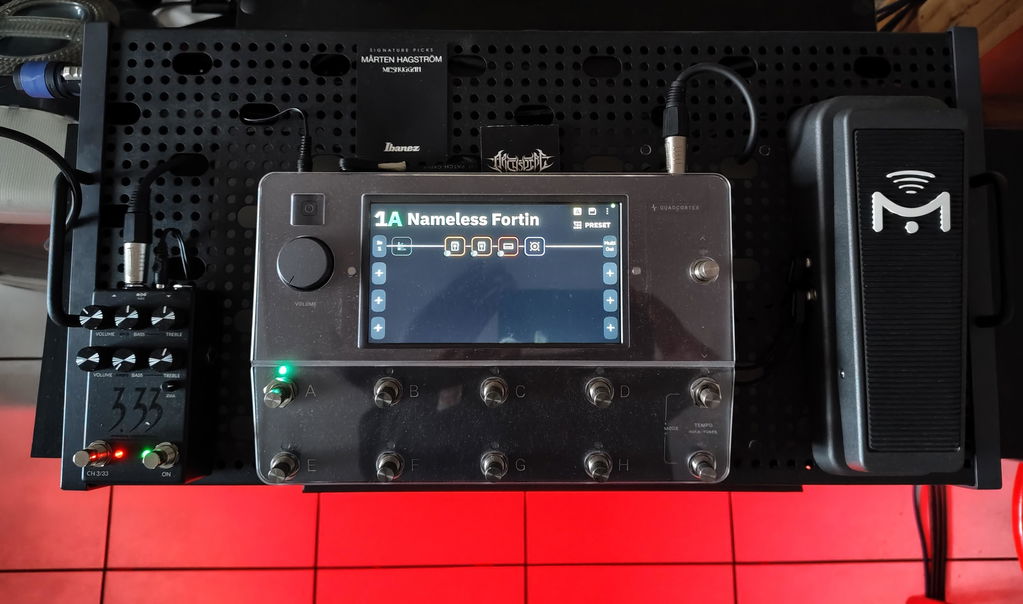
Absolutely amazing. One of the best distortion pedals I have ever used
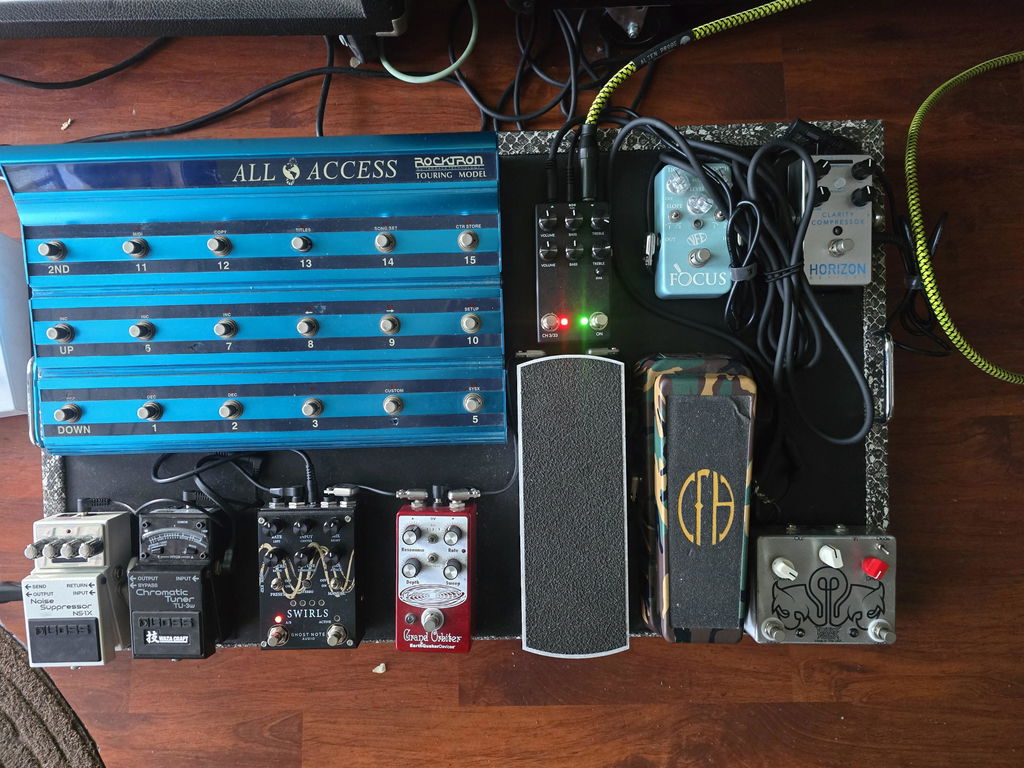
The absolute best noise gate I have ever used.
When chasing the ultimate high-gain guitar tone, the natural instinct is often to just reach for more - more gain, more bass, more volume. But in the world of modern heavy music, building a colossal guitar sound is actually an exercise in control and precision. Whether you are dialing in your amplifier in the room, setting up your pedalboard, or tweaking an equalizer plug-in in your DAW, understanding the anatomy of your guitar’s frequency spectrum is what separates a crushing, articulate mix from a muddy, unintelligible wall of noise.
The biggest mistake many players make is leaving too much low-end in their guitar signal. Anything below 60Hz is essentially sub-low rumble. While it might feel powerful when you’re playing a riff by yourself in your bedroom, in a full band mix, this frequency real estate belongs strictly to the bass guitar and the kick drum. Using a High-Pass Filter (HPF) to cleanly cut everything below 60Hz or 80Hz will instantly tighten up your tone and stop you from clashing with the rhythm section.
Moving slightly up to the 60Hz–100Hz range, you find the cabinet resonance. This is that physical "thump" that hits you in the chest when you stand in front of a 4x12". You want to preserve this, but it requires a delicate balance. A great studio technique (often referred to as the "Pultec trick") is to slightly boost this resonant frequency to maintain the physical feel of the cabinet, while simultaneously cutting the frequencies immediately above it to prevent low-end clutter.
The 100Hz to 250Hz range is where the actual "meat" of your guitar tone lives. This is what gives your palm-muted chugs their weight, bloom, and authority. However, this is also the primary danger zone for mix-ruining cloudiness. If your tone sounds overly muddy, pulling back a few decibels in this region is usually the cure. In modern production, it is incredibly common to use a dynamic EQ to clamp down on this specific frequency during heavy palm mutes, keeping the chugs tight without permanently thinning out the guitar.
As we cross into the 250Hz to 500Hz territory, we hit the low-mids. This area provides the body and core note definition of the guitar. For decades, the infamous "smiley-face" EQ (boosting the bass and treble while completely scooping the mids) was the go-to for metal players. But remember: the electric guitar is inherently a midrange instrument. If you scoop out your lower mids completely, your guitar will sound hollow and vanish entirely when the cymbals, bass, and vocals enter the track. You may need to make small, strategic cuts here to avoid a "boxy" sound, but never gut this section entirely.
If the lower mids are the body of the tone, the high-mids (500Hz – 1kHz) are the throat. This is an incredibly sensitive area. Too little, and your tone loses its unique voice; too much, and it starts to sound unnatural, cheap, and aggressively nasal.
Right above this, in the 1.5kHz to 2kHz range, is where your pick attack lives. In fast, aggressive metal, articulation is everything. When you are playing complex, syncopated riffs, the listener needs to hear the physical strike of the pick against the string. A gentle boost in this area will help your picking hand cut through the densest of mixes, bringing out the raw aggression and percussive nature of your performance.
The 3kHz to 8kHz range is arguably the most frustrating area for guitarists and mix engineers alike. This is the presence range, which gives your tone its brightness, clarity, and edge. Unfortunately, it is also home to harsh, fatiguing frequencies—often described as "ice-pick" harshness or annoying, ringing whistles.
When dealing with this range, you must act surgically. Instead of using broad EQ moves that kill the life of your tone, use a very narrow EQ band to "sweep" and hunt down the specific frequencies that are piercing your ears, and notch them out.
Finally, we have the "Air" or "Fizz" range, comprising everything from roughly 8kHz and above. While a little bit of high-end air can make a clean tone feel open, high-gain distortion inherently generates a massive amount of useless high-frequency fizz. Implementing a Low-Pass Filter (LPF) around 8kHz to 10kHz will cleanly chop off that unwanted, fatiguing static, leaving you with a focused, professional-sounding top end.
Understanding these frequency ranges provides you with a roadmap, but your ears must always be the final judge. Every guitar, pickup, and speaker cabinet interacts differently. A great rule of thumb is to start by making subtractive EQ moves—cutting the bad frequencies before you ever think about boosting the good ones.
Mastering EQ is an ongoing journey, but by understanding the anatomy of your guitar tone, you can ensure that every riff hits with maximum impact. Be sure to check out the full video lesson above for visual examples and audio demonstrations of these concepts in action.
Stay loud, and happy tweaking.