

How to Dial Tight Metal Rhythm Tone

Let’s be honest: anyone can turn a gain knob to ten and make a lot of noise. But in the world of modern metal - where sub-tuned strings and lightning-fast staccato riffs reign supreme - gain is often the enemy of clarity. If your "brutal" tone sounds more like a swarm of angry bees trapped in a glass house, you don't have a gear problem; you have a calibration problem.

Achieving a tight metal rhythm tone is about the surgical removal of "flub" and the strategic reinforcement of "attack." At Fortin Amps, we’ve built a legacy on this exact science. Here is how you dial in a tone that doesn't just take up space, but actually commands it.

1. The Gain Paradox: Less is More

The biggest mistake players make is compensating for a lack of technique with excessive gain. When you oversaturate your signal, you lose the "note definition" and the percussive "thump" of the pick hitting the string.

The Fix: Start with your amp’s gain at zero and slowly roll it up while playing aggressive palm-mutes. Stop the moment the notes stop sounding "dry" and start to sustain. You want just enough saturation to feel the harmonics, but not so much that your chords turn into a blurred mess. Remember: the "heaviness" in modern metal comes from the tightness of the performance and the integration with the bass guitar, not the amount of fuzz on your signal.

2. The Secret Sauce: The Front-End Boost

If you want that signature "Fortin" chug, we need to talk about the front end. In a high-gain circuit, the low frequencies often hit the preamp tubes too hard, causing them to "fart out" or become muddy.

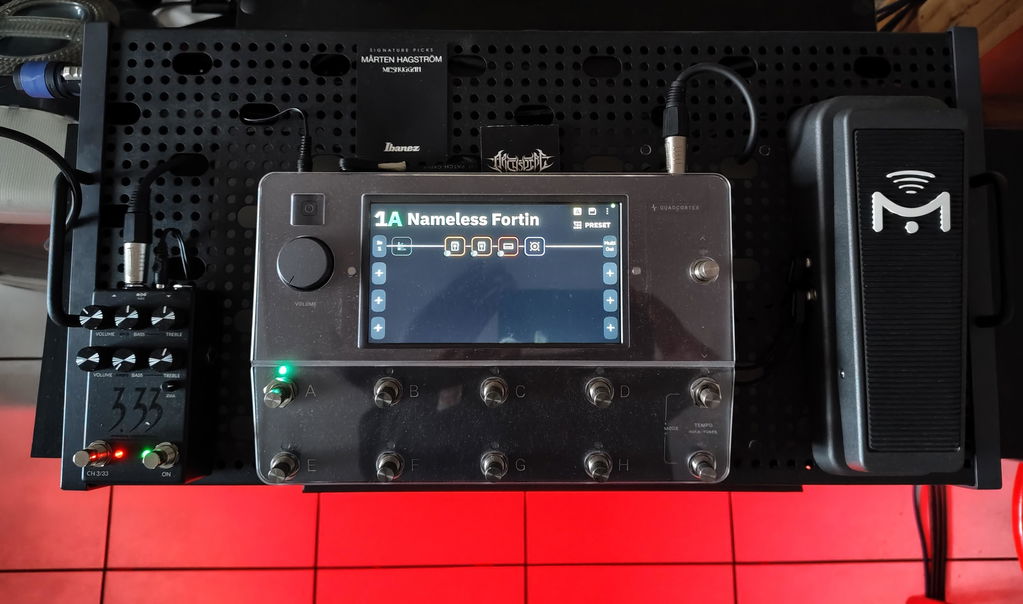
This is where a precision boost like the Fortin 33 or the Grind becomes essential. These aren't your grandpa’s blues overdrives. They are designed to:

  • Cut the mud: They filter out the sub-low frequencies before they hit the amp.
  • Shift the mids: They add a specific peak in the high-mids that emphasizes the "clank" of the pick.
  • Tighten the response: They make the amp react faster to your playing.

By boosting the signal before the distortion, you’re telling the amp exactly which frequencies to distort and which to leave alone.

3. Silence is a Weapon: Precision Gating

In modern metal, the space between the notes is just as important as the notes themselves. If you’re playing fast, stop-start riffs (the "djent" or "tech-metal" aesthetic), any residual hiss or string hum will kill your impact.

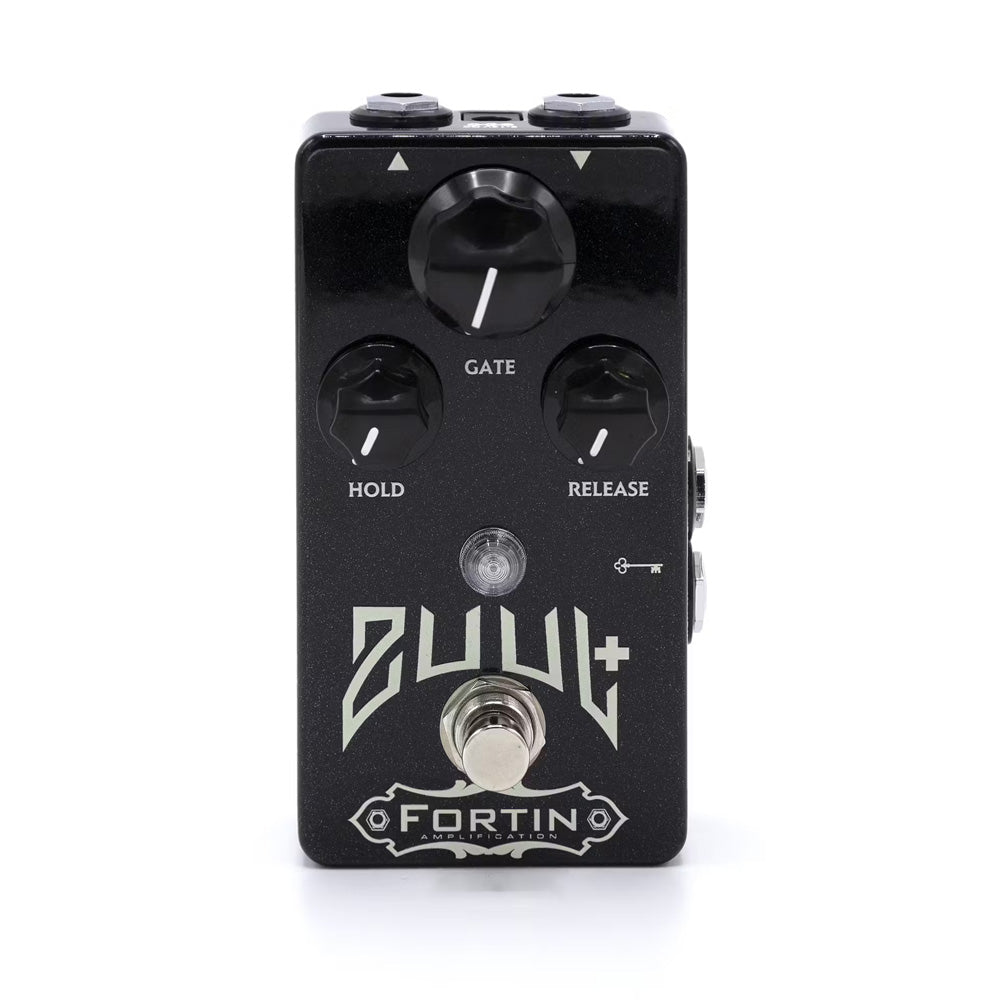
The Fortin Zuul has become an industry standard for a reason. Using its "Key Input" allows the gate to track your guitar’s clean signal directly, meaning it opens and closes with surgical precision based on your actual playing, regardless of how much gain you're running. A tight gate doesn't just stop noise; it squares off the ends of your notes, making your rhythm playing sound inhumanly precise.

4. The EQ Battle: Respect the Mids

The "scooped" sound of the 90s is a relic. If you want to be heard in a mix - especially if you're tuning down to Drop A or lower - you need mids.

  • Lows: Keep them around 4 or 5. Let the bassist handle the sub-frequencies.
  • Mids: This is where the "meat" lives. Focus on the 800Hz to 1.2kHz range to give your guitar presence.
  • Highs/Presence: Use these to add "air" and "bite," but be careful. Too much will result in "fizz" that fatigues the listener’s ears.

5. The Final Link: Speakers and IRs

You can have the best head and pedals in the world, but if you run them through a flabby cabinet, it’s all for naught. For tight rhythm, you want speakers with a fast transient response - like the classic Celestion Vintage 30.

If you’re recording digitally, your Impulse Response (IR) choice is 70% of your tone. Look for IRs that were captured with a solid-state power amp for maximum transparency, or those specifically engineered for high-gain applications. If you are in the Two notes eco-system, you really need to get the Fortin Essentials Collection!

The Verdict

Tightness is a holistic pursuit. It starts in your hands, is refined by your pedals, and is projected by your speakers. By trimming the fat off your low end and using high-quality tools like the Fortin 33 and Zuul, you move away from "noisy" and toward "heavy."


How to Dial Tight Metal Rhythm Tone


Hinterlassen Sie einen Kommentar

×
There is no Dana. Only a virtual assistant.